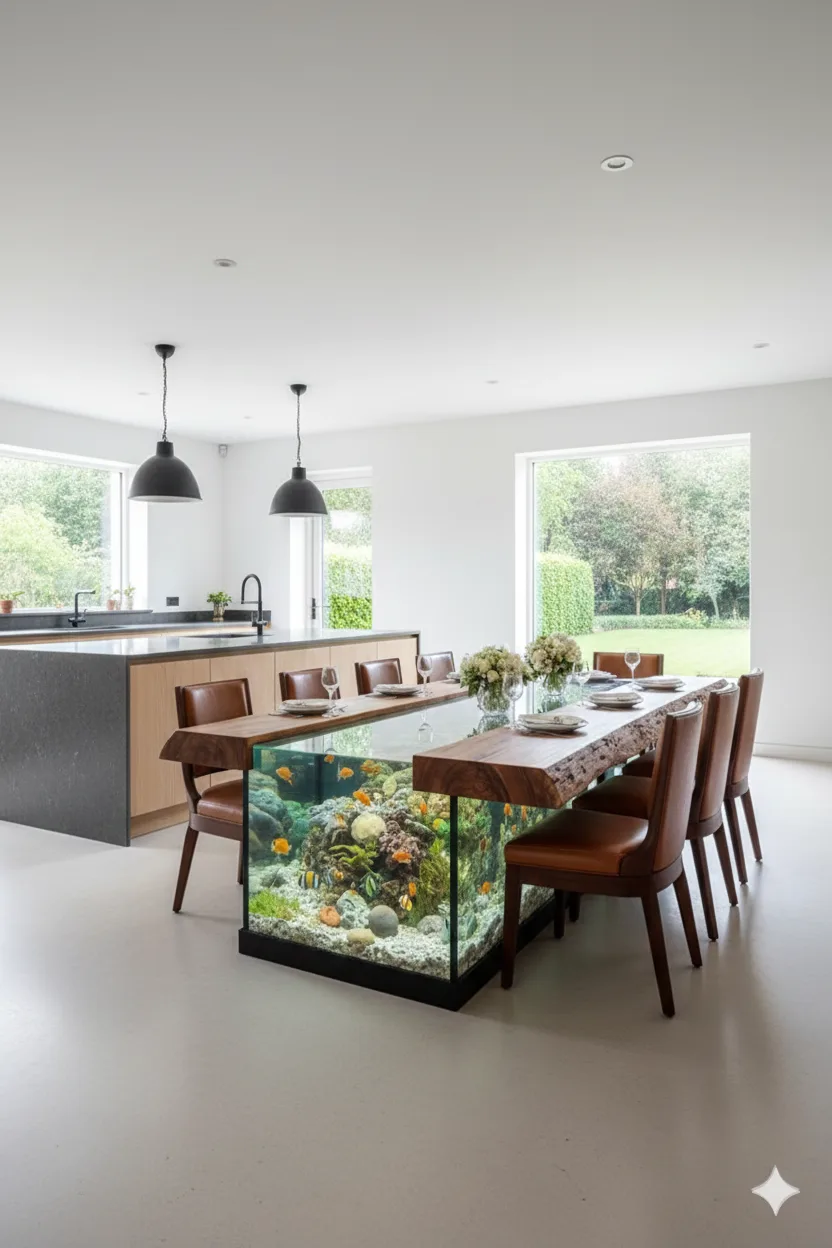
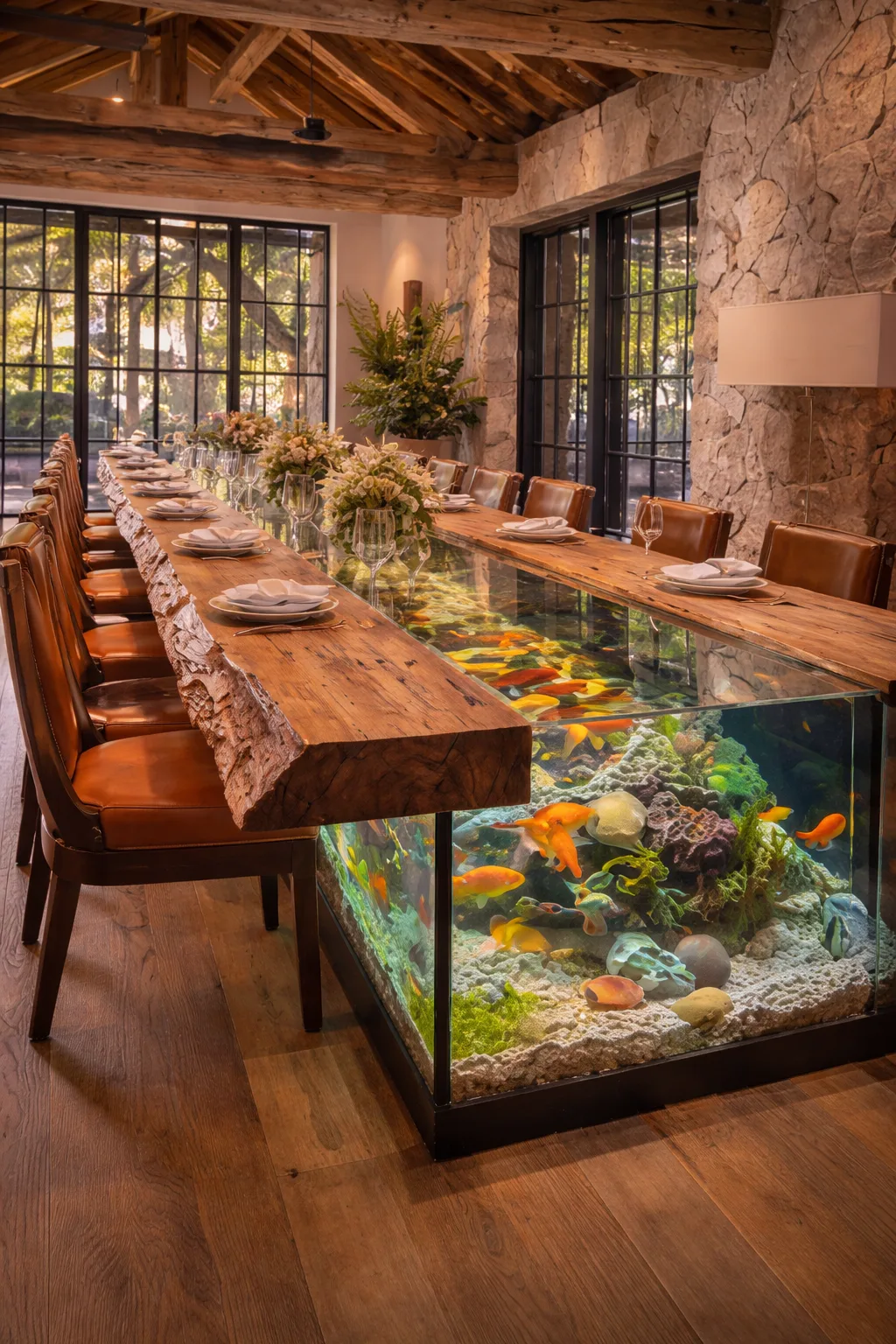
The aquarium dining table is a marvel of modern interior design, merging functionality with tranquility by integrating aquatic landscapes into everyday living spaces. It offers a unique blend of visual appeal and social utility, transforming a typical dining experience into an immersive encounter with nature. Whether you’re a fish enthusiast or simply looking to elevate your home’s aesthetic, an aquarium dining table can serve as a stunning centerpiece that captures attention and sparks conversations.
In this article, we explore how to use an aquarium dining table, along with practical examples, comparisons, and expert advice to help you make an informed decision about incorporating this spectacular piece into your home. From choosing the right design to maintenance tips, discover how this innovative furniture piece can redefine your living space.

Contents
- 1 The Art and Functionality of the Aquarium Dining Table
- 2 Examples of Unique Aquarium Dining Table Designs and Setups
- 3 The Environmental Impact and Ethical Considerations of Aquarium Dining Tables
- 4 Designs and Features of Aquarium Dining Tables
- 5 Setting the Perfect Atmosphere with Your Aquarium Dining Table
The Art and Functionality of the Aquarium Dining Table
Adding an aquarium dining table introduces a harmonious blend of art and practicality. Combining a fully functional dining surface with a mesmerizing aquatic display, these tables serve as conversation starters while enhancing the overall ambiance of your dining area. But how exactly do you utilize such a multi-faceted piece in daily life?
Understanding the core functions and potential uses of an aquarium dining table is essential before making a purchase. These tables are often customized to fit specific aesthetic or functional needs, making them versatile investments for various interior styles. They can be used not just for dining, but also as a statement piece in living rooms or offices, offering an ambiance of serenity backed by a captivating aquatic scene.
How to Use an Aquarium Dining Table in Your Home
Utilizing an aquarium dining table effectively involves more than just placing it in your space. It requires thoughtful planning to ensure that the fish’s habitat remains healthy while the table remains functional for everyday use.
Start by selecting the right size and shape of the table that fits your dining or living area. Position it in a well-lit spot, ideally with access to natural sunlight, which benefits both the aquatic life and the overall aesthetic. When dining or entertaining, make sure that the fish tank is adequately covered or protected to prevent splashes or accidental spills.
In addition, consider incorporating LED lighting into your aquarium table to simulate natural daylight cycles. This not only enhances the visual appeal but also supports the health of the aquatic inhabitants. Regular maintenance and expert care are crucial, so establishing a cleaning and feeding routine ensures the longevity of both your table and aquatic life.
Examples of Unique Aquarium Dining Table Designs and Setups
A company’s or an individual’s creativity can lead to astonishing variations of the aquarium dining table. From minimalist styles to elaborate aquatic underwater scenes, the possibilities are endless. Understanding different examples can inspire ideas suited for your taste and space.
Some tables feature a clear, glass-top with a large, central fish tank embedded directly into the table, allowing a panoramic view of the aquatic environment. These designs often use resistive layers to ensure durability while providing maximum visibility. Others opt for smaller, artistically designed tanks that wrap around the table edge, creating a more subtle yet equally enchanting effect.
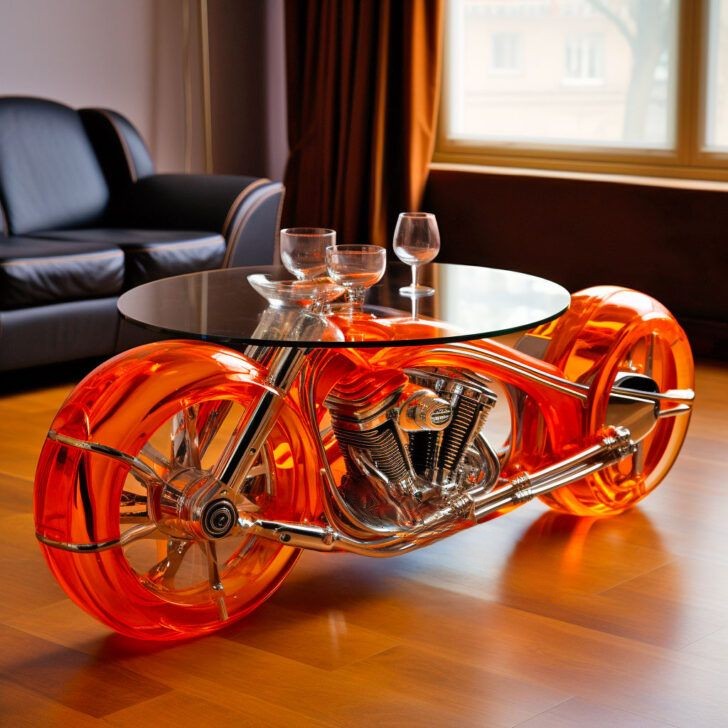



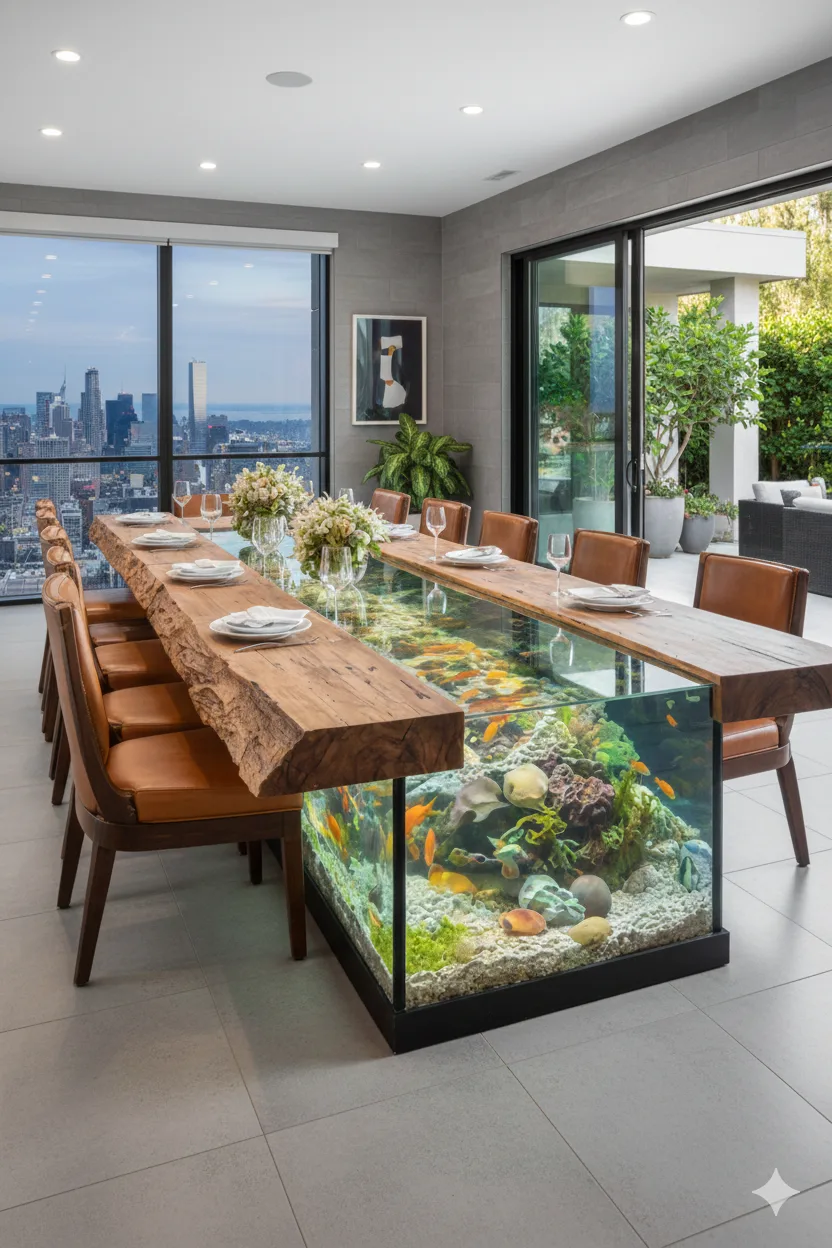
Traditional setups include freshwater species like tetras or guppies, which are easier to care for and add lively movement to the aquatic landscape. More sophisticated designs might incorporate reef environments or even miniature aquatic forests, combining live plants with marine life for a vibrant ecosystem.
When comparing different setups, consider practicality alongside aesthetic appeal. Bulletproof glass and durable materials improve usability, while customizable lighting and filtration systems ensure the creature well-being. An aquarium dining table that suits your lifestyle should balance functionality with artistic expression.
Comparing Different Aquarium Dining Table Setups
The variety of aquarium dining tables ranges from DIY models to luxury custom creations. Basic models provide a stunning visual but may require more frequent maintenance. Premium options often include advanced filtration, temperature regulation, and automation, making them easier to care for over time.
A critical comparison lies in the material quality—acrylic vs. glass, for example—where acrylic offers lighter weight and shatter resistance, but glass provides clearer visibility and scratch resistance. Additionally, some tables are built with modular components, enabling easy upgrades or repairs, which extend the lifespan of the piece.
Price points also vary significantly. Budget-friendly options might suit hobbyists starting their aquatic journey, while high-end aquarium dining tables cater to those seeking luxury and precision engineering. Your choice should reflect your commitment level, aesthetic preferences, and budget, always prioritizing the well-being of the aquatic inhabitants.
Tips for Maintaining an Aquarium Dining Table
Maintenance is integral to preserving the beauty and function of your aquarium dining table. Regular cleaning of the tank’s glass or acrylic surface prevents algae buildup and maintains clarity. Feeding your fish appropriately and monitoring water quality are vital for a thriving aquatic environment.
Invest in a reliable filtration system that suits the size of your tank to keep the water clean and oxygenated. Test kits for pH, ammonia, and nitrite levels should become part of your routine to ensure a healthy ecosystem. Avoid overstocking the tank to prevent stress and disease among the fish.
Lastly, remember that a well-maintained aquarium can last for years—so establishing a routine and possibly hiring professional assistance for technical tasks like water changes and equipment checks will ensure your aquarium dining table remains a stunning and healthy centerpiece.
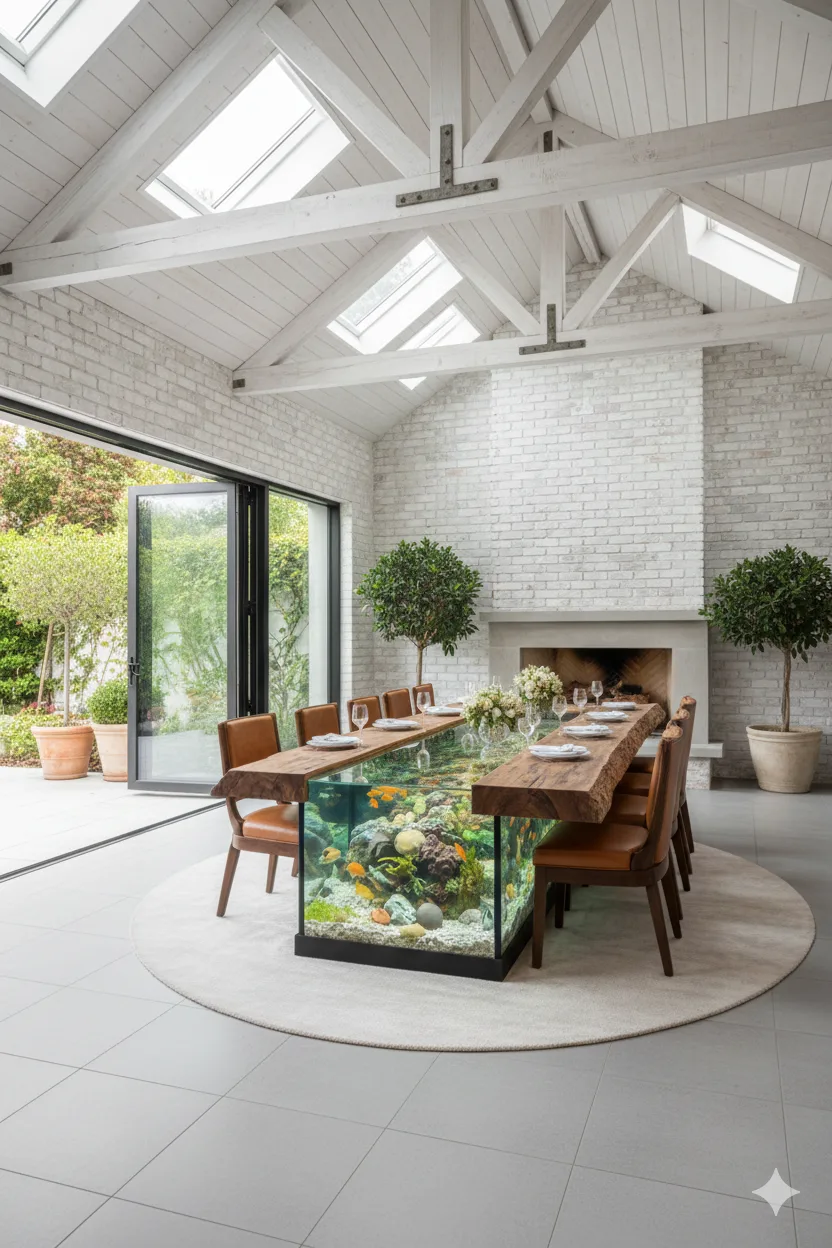
The Environmental Impact and Ethical Considerations of Aquarium Dining Tables
While aquarium dining tables bring aesthetic and emotional value, it’s vital to consider their ecological footprint and ethical implications. Responsible sourcing of aquatic life and sustainable environment practices should be at the forefront of your purchasing decision.
The impact begins with selecting eco-friendly suppliers that prioritize humane treatment and conservation efforts. Opt for tanks that use energy-efficient lighting and filtration systems designed to minimize power consumption. As an owner, proactively research the species you intend to keep, ensuring they are bred in captivity rather than wild-caught, which helps preserve natural habitats.
Supporting local breeders and avoiding impulse purchases also contribute to sustainability. Consider the lifespan of your aquarium dining table and its inhabitants, and plan for future care that minimizes waste. Engaging with expert communities can provide insights into ethical practices and innovative ways to maintain a thriving, responsible aquatic environment.
The aquarium dining table offers an exceptional fusion of art, ecology, and functionality, transforming ordinary living spaces into mesmerizing aquascapes. It’s a versatile piece that requires thoughtful use, appropriate design choices, and ongoing maintenance to thrive. By understanding different setups, comparing features, and considering environmental impacts, homeowners can enjoy a luxurious yet responsible aquatic experience. Whether used as a statement piece or a functional dining table, this innovative furniture piece opens a window to nature’s serenity within the comfort of your home.
Designs and Features of Aquarium Dining Tables
A well-designed aquarium dining table not only serves as an eye-catching centerpiece but also creates a serene and peaceful atmosphere within your home. When choosing an aquarium dining table, it’s essential to consider various designs and features that suit your personal style and living space.
Designing an aquarium dining table involves a blend of creativity and functionality. The base can be crafted from wood, metal, or even polished stone, depending on the overall aesthetic you aim to achieve. These bases can take various forms, from rustic farmhouse looks to sleek modern frames, ensuring that the aquarium dining table fits seamlessly into your living area.
Additionally, the choice of tank size and shape is crucial. A rectangular tank provides ample viewing area and is often the most spacious, while circular or oval tanks promote a softer, more organic flow, appealing to those who prefer curves over straight lines.
Choosing the Right Size and Proportions
When determining the size of your aquarium dining table, consider both the dimensions of your room and the type of fish you plan to keep. Smaller tables work well in compact spaces and might host a 10- to 20-gallon aquarium. Larger dining rooms can accommodate grand designs incorporating 50 gallons or more, supporting diverse aquatic life.
The height of the table is another important factor to weigh. Typical dining tables range from 28 to 30 inches in height. Ensure the tank is easily viewable from a seated position, creating an inviting atmosphere for meals and gatherings. A taller aquarium can add a dramatic effect while also allowing for a more dynamic underwater environment.
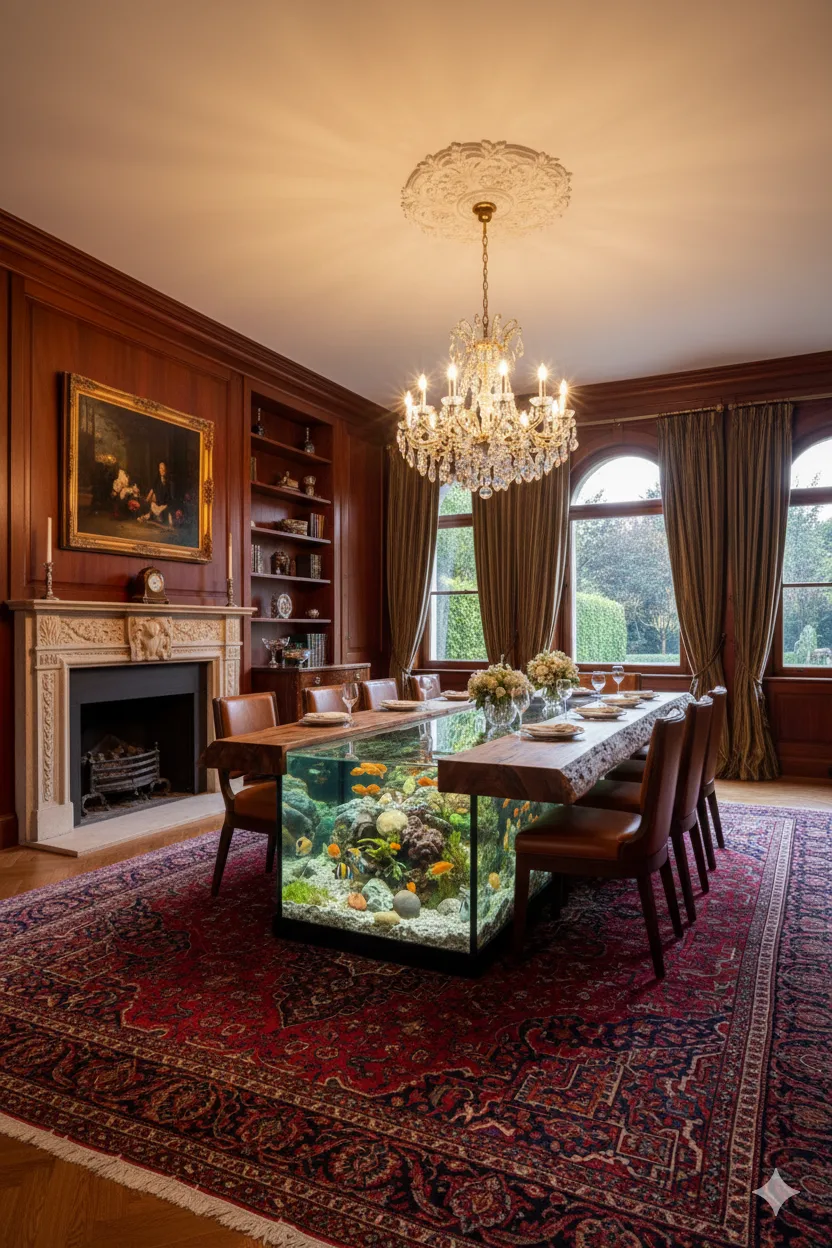
Use a table with a built-in filtration system to increase convenience and make maintaining your aquarium dining table simpler. Such designs lead to more time enjoying the ambiance and less time worrying about upkeep.
Materials and Durability Considerations
The materials used in constructing your aquarium dining table play a significant role in its overall aesthetic and durability. Glass tanks offer an unparalleled viewing experience, showcasing the aquatic life beautifully while providing clarity. However, glass can be heavy and requires careful handling.
Acrylic, on the other hand, is lighter and can provide a seamless look due to its flexibility in design. While acrylic is prone to scratching, proper maintenance and regular cleaning can mitigate these issues. Investing in scratch-resistant treatments can further extend its life, providing clear views for your dining enjoyment.
When selecting the base materials for your table, ensure that they are water-resistant and suitable for an environment near water. Utilize composite woods treated for moisture resistance or metals with anti-corrosive finishes, ensuring that your table maintains its structural integrity despite consistent exposure to humidity and splashes.
Setting the Perfect Atmosphere with Your Aquarium Dining Table
Beyond just being a functional piece of furniture, an aquarium dining table can dramatically enhance the atmosphere of your dining area. The gentle movement of water and fish within the tank introduces a calming influence, making meals more enjoyable and social interactions more serene.
Lighting plays a significant role in setting the right ambiance. Integrating LED lights within the aquarium or countertop allows for diverse lighting options. Soft blue or green lights enhance the natural look of the aquatic environment, while brighter settings can energize the space during gatherings.
When positioning the aquarium dining table, consider the natural light in the space. Direct sunlight can promote algal growth, so choosing a well-lit corner without direct exposure to sun rays ensures both your aquatic companions and the table remain healthy and vibrant.
Complementing Decor and Color Schemes
Your aquarium dining table should harmonize with the existing decor and color palette of your living space. Choose fish and aquatic plants that complement the color scheme rather than clash. For instance, vibrant blue or purple fish can contrast beautifully against neutral or earthy tones.
Decor elements, such as driftwood, rocks, or plants, can enhance the aquarium’s aesthetic and create a natural underwater environment that matches the surrounding decor. Consider the overall theme of your dining area; a nautical-inspired theme can transcend into the aquarium dining table by utilizing seashells and colorful marine-themed decor.
Adding seating that mirrors or complements the color scheme of the table and aquarium can tie the space together. Incorporating textures, such as woven fabrics or polished wood, can also unify the design, creating a coherent and inviting atmosphere for guests.
Seasonal Decor Changes
Change the decor within your aquarium dining table seasonally to keep things fresh and engaging. In winter, decorating with faux snow or incorporating icy blue lights can create a winter wonderland effect. In summer, adding vibrant plants and playful decorations can evoke the feeling of a tropical paradise.
Aligning your fish selection with seasonal themes can also enhance your dining experience—consider using more vibrant species in the warmer months or subtle, calmer colors in the cooler ones. This approach invites creativity in using your table while maintaining interest and excitement throughout the year.
The aquarium dining table is a stunning combination of artistry, functional furniture, and aquatic life. With thoughtful design choices, attention to aspects like size, materials, and decor, homeowners can create an enchanting environment that serves as a focal point for dining and gatherings. As a piece that requires both aesthetic appreciation and responsibility in care, it invites a deeper connection with nature while enriching your living space. By balancing beauty, practicality, and sustainability, your aquarium dining table can become a cherished and memorable feature of your home.