
Contents
- 1 When Fashion Grows from the Ground
- 2 The Birth of an Idea: How Corn Became Couture
- 3 Design Language of Corn Heels: Sculpting the Organic
- 4 Where Agriculture Meets Aesthetics: The Deeper Meaning
- 5 Corn Heels in Culture: From Runways to Museums
- 6 The Future of Corn Heels: Trend, Movement, or Manifesto?
- 7 Conclusion: Walking the Line Between Earth and Art
When Fashion Grows from the Ground
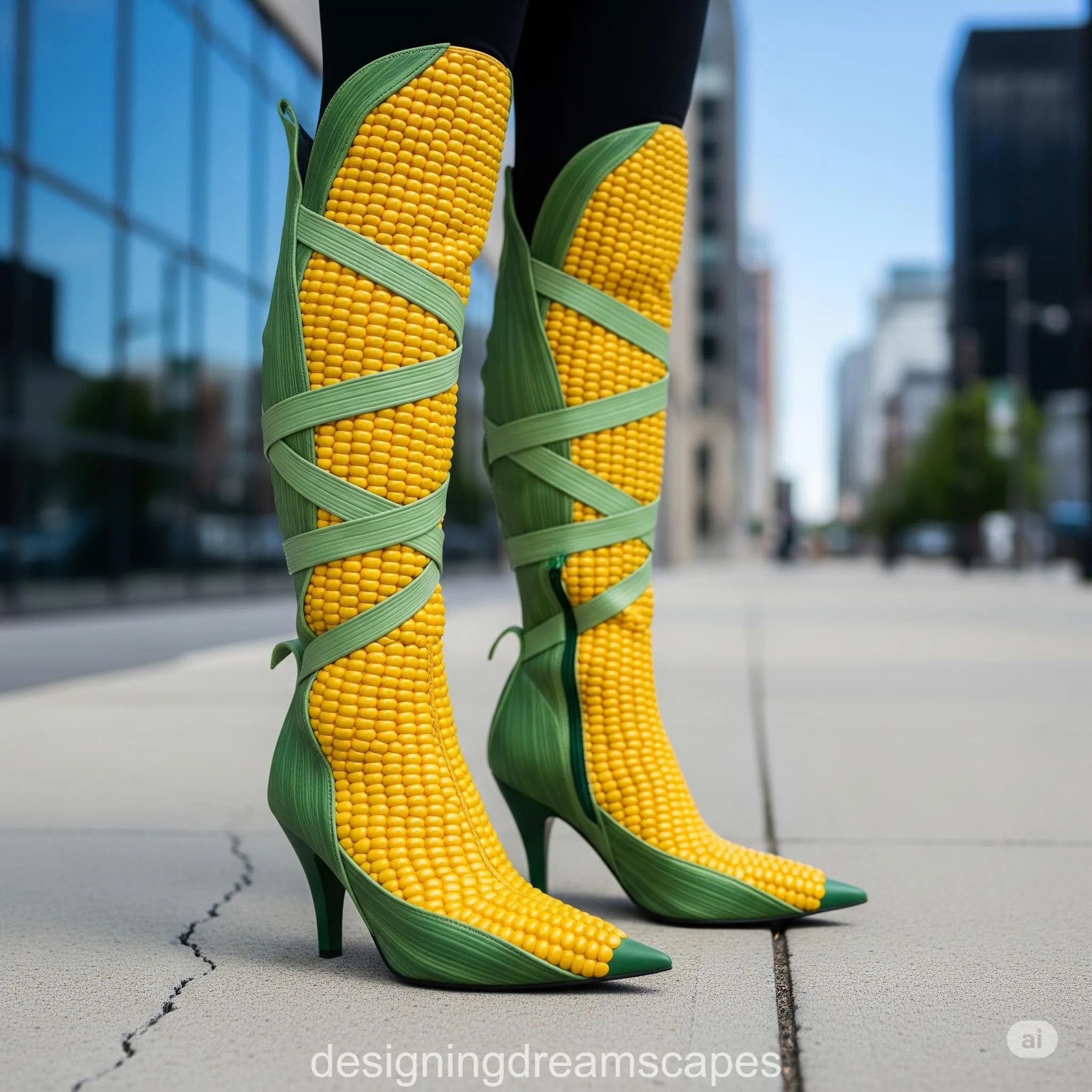
In an era where fashion is no longer confined to runways and seasonal trends, a new wave of creativity is taking root—quite literally. Enter the world of Corn Heels, a striking convergence of agriculture and artistry that is transforming the way we view footwear. These imaginative designs, inspired by the shape, texture, and symbolism of corn, challenge the boundaries of conventional fashion and invite us to rethink the relationship between nature and self-expression.
What makes corn heels so fascinating is not just their quirky appeal or eye-catching forms, but the deeper cultural dialogue they spark. They are more than accessories—they are wearable sculptures, symbolic hybrids, and statements of sustainability. In a time when the fashion industry is seeking meaning, purpose, and originality, corn heels step in as avant-garde icons of innovation.
From being a staple crop in many civilizations to becoming a symbol of fertility, growth, and abundance, corn now finds a fresh identity in the world of design. This article explores the emergence of corn heels as wearable art, diving into their conceptual origins, aesthetic forms, symbolic messages, and impact on fashion, sustainability, and cultural storytelling.
The Birth of an Idea: How Corn Became Couture
From Farms to Footwear
The idea of using corn as inspiration for fashion may seem outlandish at first—but when examined through the lens of contemporary art and conceptual design, it becomes a natural evolution. Corn is one of the world’s most recognizable plants—instantly associated with agriculture, nourishment, and earthiness. Translating this organic imagery into high-fashion footwear is both an act of playful rebellion and serious artistry.
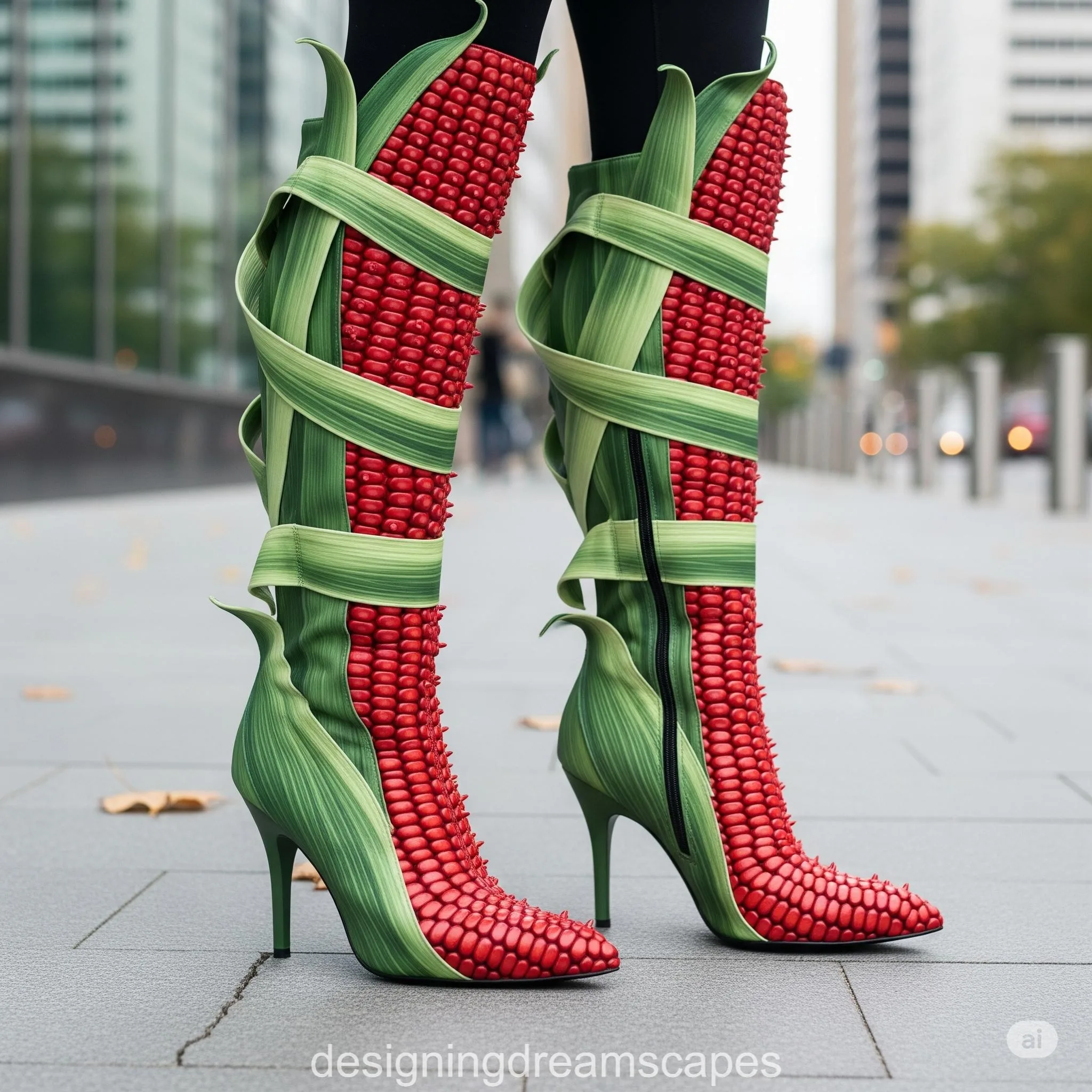
Early iterations of corn heels emerged in avant-garde fashion circles and art exhibitions. Designers sought to combine natural materials or corn-inspired shapes with bold shoe silhouettes. Some experimented with actual dried husks and kernels, embedding them into the heel or structure. Others leaned into the corn aesthetic—mimicking the segmented shape of kernels or the golden hue of a cornfield under sunlight.
The movement aligns with a broader trend of bio-inspired design and agricultural aesthetics that can be seen across fashion, architecture, and interior design. Nature is no longer just a backdrop—it is the blueprint.
Symbolism Behind the Stalk
Corn is far more than a vegetable. It is a symbol of life in numerous cultures. In Native American traditions, corn is one of the Three Sisters—the trio of crops (corn, beans, and squash) that sustain life. In Mesoamerican mythology, humans were even believed to be made from corn dough. Corn appears in ancient rituals, seasonal festivals, and folk art across continents.
By incorporating corn into a high-fashion object like a heel, designers are elevating agricultural symbols to artistic realms. The result is a powerful juxtaposition: the rustic meets the refined, the humble meets the haute.
Design Language of Corn Heels: Sculpting the Organic




Form and Function in Harmony
Corn heels are a blend of imaginative abstraction and functional design. While they may vary in materials and aesthetics, certain visual cues are commonly shared:
- Kernels and Texture: Designers often mimic the bulging roundness of kernels through padded forms, studded embellishments, or bead-like textures.
- Stalk-Inspired Heels: Many corn heels feature a stalk or cob-shaped heel, often using spiral or segmented shapes to evoke the visual rhythm of a corn plant.
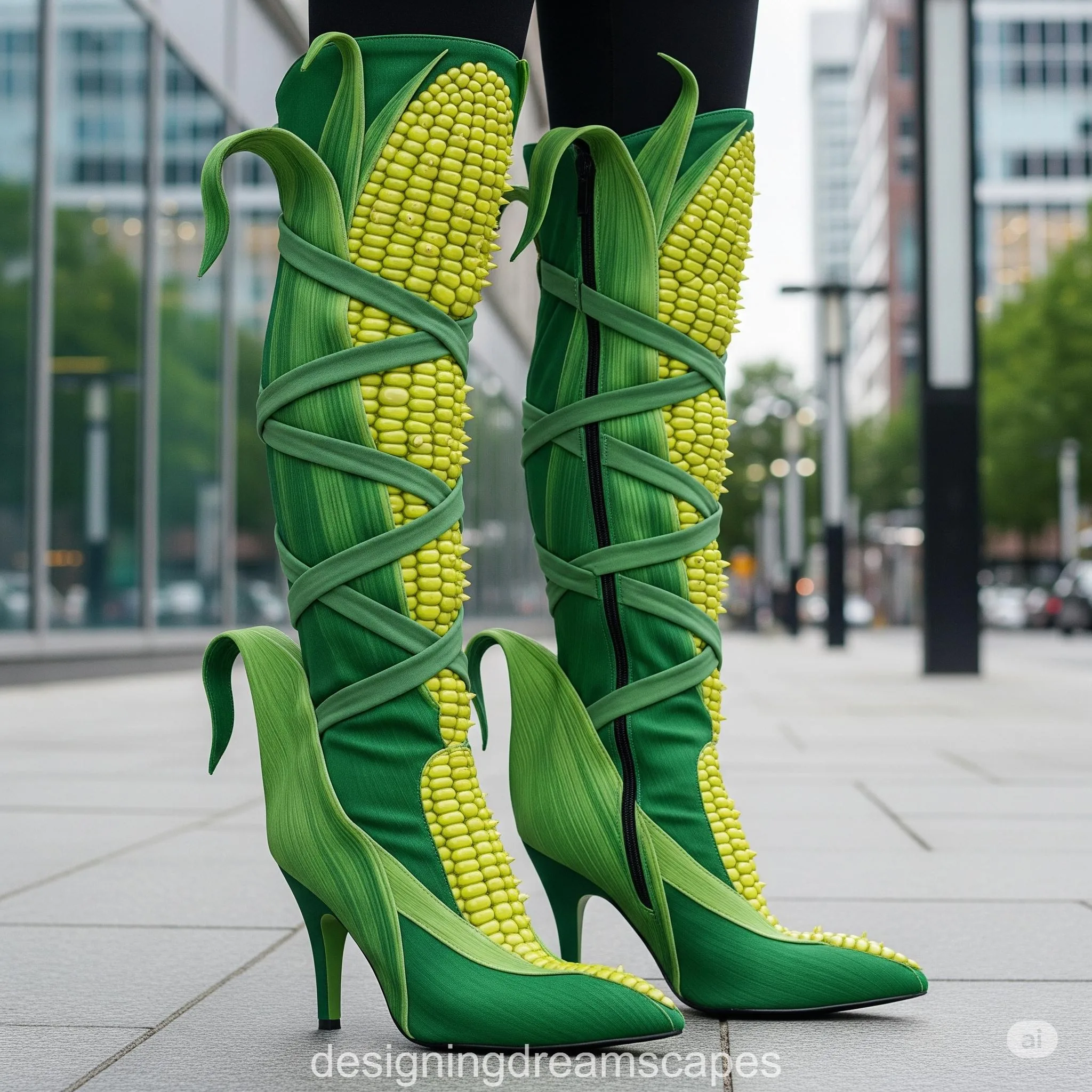
- Husks as Fabric: Flowing lines and layers are used to represent corn husks, sometimes with green silk or layered leather to emulate natural wrapping.
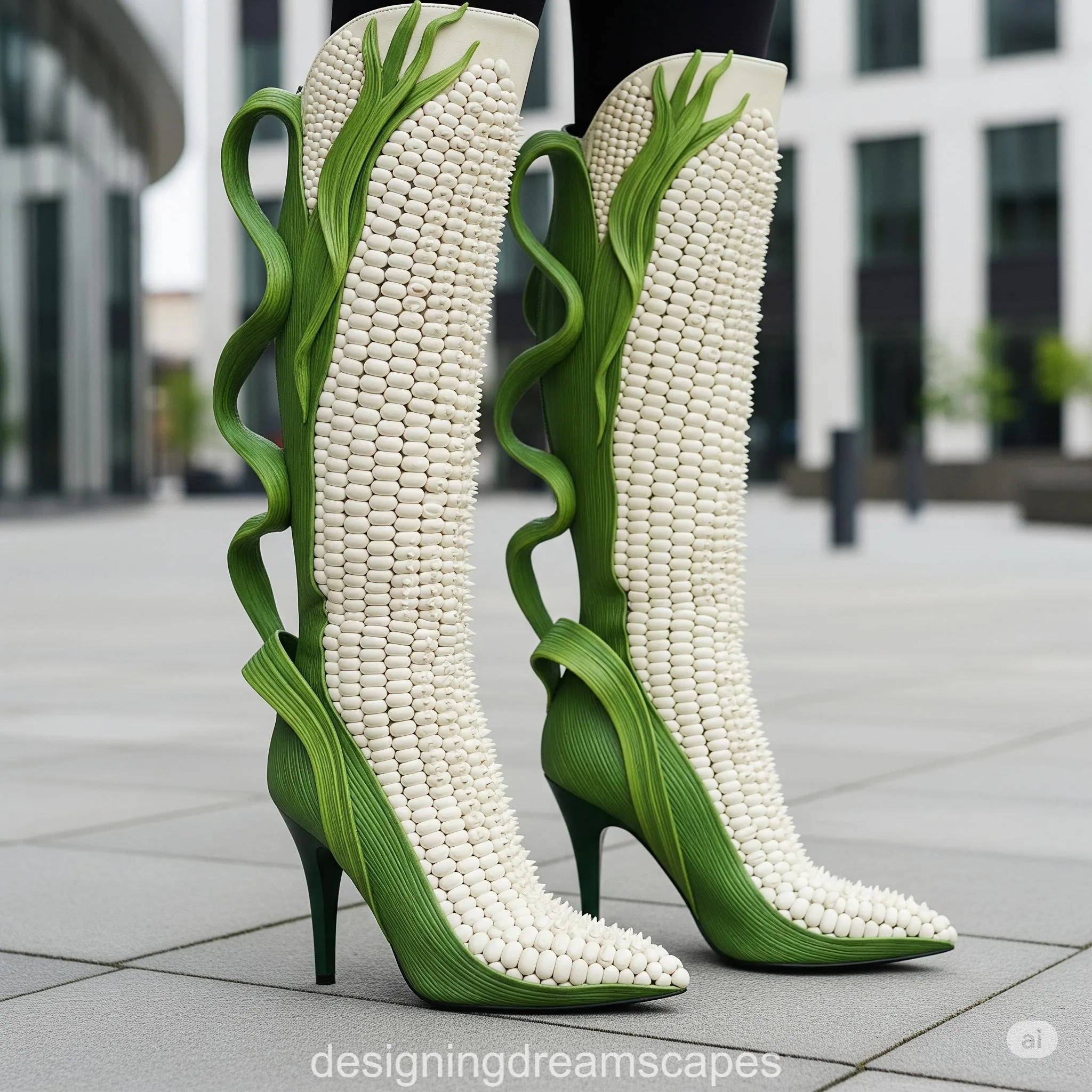
- Color Palette: Golden yellows, greens, earthy browns, and creamy whites dominate the color spectrum—evoking freshness, growth, and harvest.
Despite their sculptural qualities, many corn heels are designed to be wearable, albeit with limited practicality. This balance between art object and wearable accessory is precisely what places corn heels in the realm of wearable art.
Materials: Natural and Reclaimed
One of the most intriguing aspects of corn heels is the use of eco-friendly materials. Some designers incorporate bioplastics made from corn starch, while others use recycled plant fibers or textiles dyed with natural corn pigments. This material choice enhances the corn narrative, reinforcing the idea of sustainability and ecological consciousness.
- Corn-based Bioplastics: Used for heel structure or embellishments.
- Dried Corn Husks: Used in detailing or as a design layer.
- Organic Cotton and Hemp: Styled in a way that mimics corn foliage.
- Natural Dyes: Extracted from corn silk or other plant sources.
In this way, corn heels not only represent nature visually but also embody it materially, allowing wearers to literally walk with nature.
Where Agriculture Meets Aesthetics: The Deeper Meaning
Sustainability as Style Statement
In today’s environmentally aware fashion landscape, sustainability is no longer optional—it’s inspirational. Corn heels function as more than a quirky design—they become ambassadors of conscious consumption and eco-activism.
Using agricultural motifs and natural materials calls attention to:
- The origin of materials in fashion.
- The importance of ethical production.
- The role of local farming and biodiversity in a globalized economy.
Corn heels, especially when created from corn-based bioplastics or upcycled agricultural waste, suggest a new possibility: fashion that feeds the earth instead of draining it. This message resonates deeply with younger generations, artists, and change-makers who seek authenticity and impact through what they wear.
Reimagining Rural Identity
Fashion often centers around urban influences—glamour, technology, and global chic. Corn heels challenge this narrative by giving voice to rural aesthetics and agricultural heritage. They celebrate:
- The beauty of farmland and crops.
- The hands that plant and harvest.
- The cultural legacy of rural communities.
Through corn heels, designers are paying homage to the often-overlooked elegance of everyday life in the countryside. It’s a poetic reminder that beauty grows in the fields, too.
Art as Social Commentary
Like any bold fashion piece, corn heels are conversation starters. They may be humorous, ironic, or even controversial, depending on the context. They ask the viewer:
- What is luxury?
- What is beauty?
- Why are some materials deemed “fashionable” and others not?
Corn heels destabilize these definitions. They point to a world where a cob of corn can be a couture statement—where art and agriculture share the same runway.
Corn Heels in Culture: From Runways to Museums
Avant-Garde Runway Moments
Several fashion houses and independent designers have incorporated corn heels into runway collections. These moments are often theatrical and conceptual, embracing bold silhouettes and artistic risk-taking.
Examples include:
- Sculptural corn platforms paired with rural-themed collections.
- Performance art pieces where models plant seeds or walk through husks.
- Mixed media presentations combining fashion with agricultural installations.
These fashion shows aren’t just about clothes—they’re about storytelling, message-making, and cultural disruption.
Exhibitions and Wearable Art Shows
Beyond fashion weeks, corn heels have appeared in museums, art galleries, and wearable art competitions. In these contexts, they are treated more like sculptures or narrative pieces than functional fashion. This cross-pollination of art and design gives corn heels lasting value beyond seasonal trends.
Notable exhibitions may highlight:
- The intersection of food and fashion.
- Themes of climate change and agricultural identity.
- The creative use of natural and biodegradable materials.
In this way, corn heels become timeless art pieces—artifacts of a culture that is questioning its future.
The Future of Corn Heels: Trend, Movement, or Manifesto?
Customization and Digital Design
As 3D printing, virtual modeling, and digital design tools become more accessible, designers are exploring new ways to prototype corn heels digitally, test forms, and offer personalized versions. The future may see:
- Custom-fit corn heels with client-chosen kernel shapes.
- AR try-ons of surreal agricultural footwear.
- Sustainable on-demand manufacturing using corn-based composites.
This convergence of nature and technology could take corn heels to a whole new level of innovation.
Cultural Expansion and Local Stories
Designers across different countries are adapting the corn heel concept to reflect local interpretations of agriculture. From maize in Latin America to corn symbolism in African and Asian cultures, corn heels are poised to become global icons of localized identity.
Imagine corn heels:
- Inspired by Aztec corn gods.
- Embellished with Ghanaian Kente patterns and corn husk braids.
- Stylized with Japanese wabi-sabi textures and minimalist lines.
This expansion ensures that corn heels evolve—not as a gimmick—but as a cultural canvas for the world to paint its agricultural stories on.
Conclusion: Walking the Line Between Earth and Art
Corn heels are more than quirky footwear. They are a symbol of transformation, where the everyday becomes extraordinary, where the field becomes the gallery, and where the humble becomes high fashion. They represent a new generation of design—one that roots itself in meaning, grows in creativity, and blooms in sustainability.
In wearing corn heels, we are not just stepping into a new fashion trend—we are stepping into a philosophy. A belief that beauty is not just sewn in fabric, but grown in the soil. That style is not only what we wear, but what we say through it. And that the future of fashion may very well be planted in the fields we’ve walked past for centuries.
In a world that constantly seeks the next big thing, corn heels offer a different path—a path back to our roots, forward into innovation, and boldly across the border between agriculture and aesthetics.