

Contents
Why a Cat Sleeping Bag Is Winning Over Cats (and Humans)
If you share your home with a feline, you already know one universal truth: cats are professional nappers. They don’t just sleep; they curate their naps—seeking places that feel safe, warm, and just the right kind of snug. That’s exactly where the cat sleeping bag comes in. It’s not a novelty; it’s a thoughtfully designed sleep solution that taps into your cat’s natural burrowing instincts, offering the perfect blend of warmth, comfort, and security.
In this long-form guide, we’ll unpack why a cat sleeping bag is the perfect and unique choice for modern cat parents, how to choose the right one, how to introduce it successfully, and how to keep it clean and cozy for the long haul. Whether you live with a skittish rescue, a hairless breed that craves warmth, or a senior cat who needs extra joint support, you’ll find practical, step-by-step advice here.
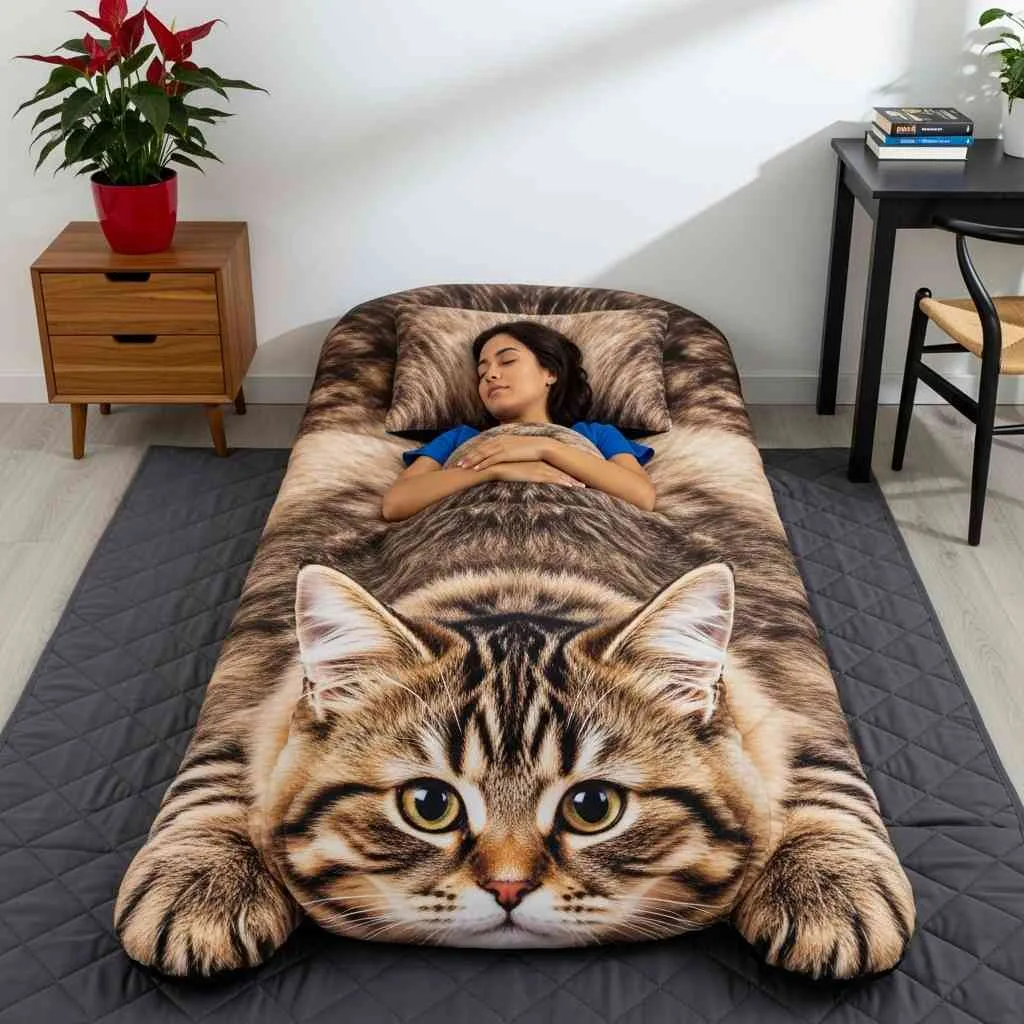
What Is a Cat Sleeping Bag?
A cat sleeping bag is a soft, tunnel- or envelope-shaped bed designed for burrowing. Unlike open beds or donut cushions, it provides a covered, cocoon-like interior that mimics the feel of a den. Some models are structured (with a semi-rigid hood or frame that holds the opening), while others are fully soft and allow cats to dig in and self-bury. You’ll find:
- Envelope bags: Flat bottom with a flap or hood—great for first-time users.
- Tunnel/cave bags: Longer, tubular shapes for full-body burrowers.
- Convertible bags: Unzip or fold to transform into a mat, cave, or hooded bed.
- Heated or insulated bags: Designed for cold climates or hairless breeds.
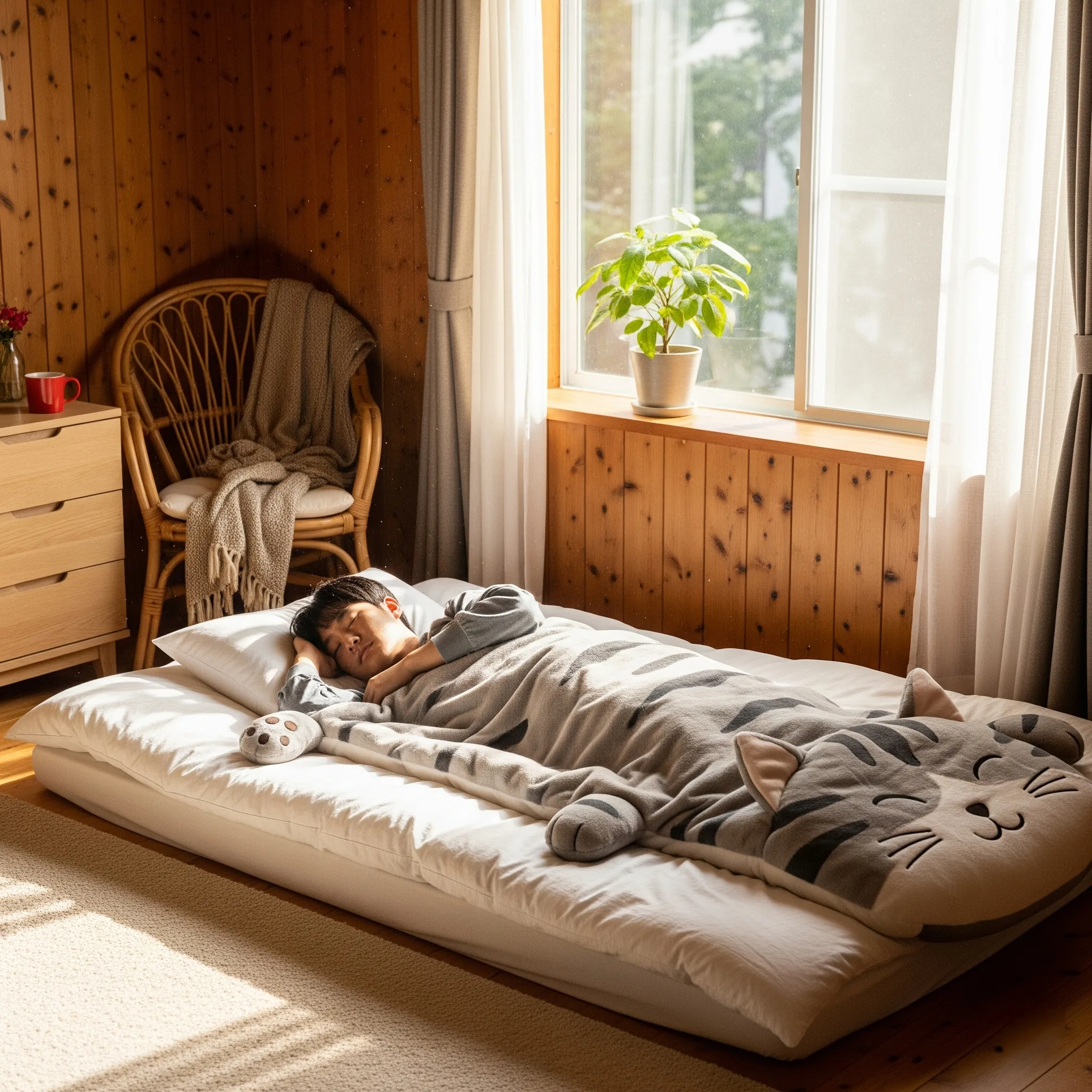


Key difference from a cat cave or igloo: caves are dome-like structures with more rigid walls; a cat sleeping bag is inherently flexible, wrapping around your cat’s body for that snug, swaddled feel.
Why Cats Love It: The Science of Snug
Cats are crepuscular hunters and solitary sleepers by nature. The cat sleeping bag satisfies several instinctual needs:
- Security through enclosure: Covered, compressive spaces reduce visual stimuli, lowering stress and anxiety.
- Thermal efficiency: Trapped body heat keeps temperatures stable—especially useful for hairless, short-haired, or senior cats.
- Pressure comfort: Gentle pressure can feel reassuring, similar to how kittens pile together for warmth.
- Scent control: A defined space preserves familiar scents, which is soothing for territorial animals like cats.
Bonus for humans: less fur on your sofa, a tidier sleeping zone, and an adorable burrito cat every evening.
The Unique Advantages of a Cat Sleeping Bag
Versatility: Works on a couch, in a carrier, on a windowsill, or in a crate during travel.
- Seasonal adaptability: Lightweight models for summer, plush or insulated options for winter.
- Behavioral benefits: Great for shy cats that need a safe “base,” or overstimulated cats who need a wind-down space.
- Space-efficient: Easier to store or move than a bulky cat tree or rigid cave.
- Hygiene-friendly: Many come with removable liners or machine-washable fabrics.
Choosing the Best Cat Sleeping Bag: A Complete Buying Guide
1) Size & Fit
- Length rule of thumb: Cat’s nose-to-base-of-tail length + 5–8 cm (2–3 in) for wiggle room.
- Width & opening: The opening should be wide enough for easy entry but narrow enough to hold warmth.
- Burrow depth: Full tunnels suit nesters; envelope styles are easier for bag beginners.
2) Materials & Construction
- Exterior fabric: Durable microfiber, canvas, or upholstery-grade fabric for scratch resistance.
- Interior lining: Sherpa, fleece, minky, or velour for a plush feel and heat retention.
- Fill: Polyfil for loft and washability; memory foam or egg-crate foam base for joint support.
- Stitching: Double-stitched seams and reinforced opening to prevent sagging over time.
Pro tip: If your cat kneads aggressively, pick a denser, tighter-pile interior so threads don’t snag.
3) Seasonal Design
- Warm climates: Breathable cotton or bamboo blends, minimal fill, mesh vents near the base.
- Cold climates: Thick fleece or wool-blend linings, insulated hood, optional self-heating layer (reflective thermal insert).
4) Closures & Features
- Semi-rigid hood holds shape for cats that dislike fully floppy openings.
- Zippers convert bag ↔ mat (ensure zipper teeth are concealed to avoid paw snags).
- Non-slip bottom for tile or hardwood floors.
- Removable liner simplifies laundry days.
5) Cleaning & Maintenance
- Machine washability is a game-changer; check for removable inserts.
- Odor control: Charcoal or baking soda-infused liners are helpful; avoid strong fragrances.
- Hair management: Short-pile interiors trap less hair; lint-roller-friendly fabrics save time.
6) Safety Considerations
- Avoid long drawstrings, dangling toggles, or small detachable parts.
- Ensure breathable construction—no airtight plastics or foam that can trap too much heat.
- For kittens or seniors, choose an opening that doesn’t require jumping or forceful burrowing.
Measuring Your Cat for the Perfect Fit
- Length: Measure from nose to base of tail.
- Girth: Measure the widest part of the chest.
- Preferred posture: If your cat loafs tight, a snugger bag is fine; if they sprawl, size up.
- Opening comfort: The opening should be at least the width of your cat’s shoulders.
Sizing example: A 40 cm (15.7 in) cat usually fits a 45–50 cm (17.7–19.7 in) bag length with a 20–25 cm (7.9–9.8 in) opening.
How to Introduce a Cat Sleeping Bag (Even to Skeptics)
Some cats hop in immediately. Others need a plan. Try this:
- Scent it first: Place a worn T-shirt or the cat’s blanket inside so it smells like “home.”
- Smart placement: Start where your cat already naps (sofa corner, sunlit sill, beside your desk).
- Positive association: Toss in a favorite toy or a few treats; consider a light catnip sprinkle if your cat is responsive.
- Open the hood: If it’s too floppy, prop the hood with a rolled towel for clear visibility.
- Don’t force it: Let curiosity work. Praise and treat when they sniff, step on, or sit near the bag.
- Gradual nesting: Over a few days, fold the opening a bit more each time until your cat comfortably burrows.
Training tip: Short, positive sessions beat long, pressured attempts. Cats love choice.
Care & Cleaning: Keep the Cozy, Lose the Odor
- Weekly shake-out: Remove crumbs, hair, and litter dust.
- Lint-roll before washing to protect your machine filter.
- Wash cold, gentle cycle with fragrance-free detergent; air dry or tumble low.
- Deep-clean monthly: Vacuum seams, disinfect the base (check material compatibility), and refresh the liner.
- Rotate two liners: One in use, one in the wash, so kitty never loses their sleeping “territory.”
Matching the Cat Sleeping Bag to Your Cat’s Needs
For Hairless & Short-Haired Cats
Choose thick fleece, thermal inserts, and a tight, hooded design. Heated pads are okay only with strict supervision and a low, pet-safe setting.
For Senior Cats
Look for a low-threshold opening and a memory-foam base to reduce pressure on joints. Keep the bag near favorite perches to minimize jumping.
For Anxious or Shy Cats
Opt for darker, womb-like interiors. Place the bag in a quiet corner away from doorways and loud appliances. A semi-rigid hood allows them to “peek” without exposure.
For Multi-Cat Homes
Two (or three) smaller bags beat one large one; cats often prefer their own dedicated nest.
Seasonal Guide: One Cat Sleeping Bag, Year-Round Comfort
- Spring: Medium-weight fleece with breathable side panels.
- Summer: Cotton or bamboo lining; consider a fold-flat envelope bag and a cooling insert.
- Autumn: Add a removable sherpa liner for fluctuating temperatures.
- Winter: Full tunnel style, double-layer fleece, and (optional) thermal pad—monitor for overheating.
Styles & Features You’ll See (And What They’re Good For)
Burrito/Blanket Style: Simple, affordable, excellent for sofa naps.
- Cave/Tunnel Style: Maximum burrow depth; great for nervous or cold-sensitive cats.
- Hooded Envelope: Beginner-friendly; cats see the room while staying warm.
- Convertible 2-in-1: Perfect for travel—mat in carriers, bag at the destination.
- Self-Warming Layer: Reflects body heat without electricity; ideal for elderly cats.
- Water-Resistant Base: Protects floors from accidental spills or “oops” moments.
Make Your Own Cat Sleeping Bag (Two Easy Options)
Option A: No-Sew Fleece Tie Bag (Beginner-Friendly)
You’ll need:
- Two pieces of anti-pill fleece (about 60 × 80 cm / 24 × 32 in)
- Scissors, measuring tape, safety pins
Steps:
- Stack the fleece pieces with the “nice” sides facing out.
- Cut a rectangle from both pieces to your desired bag size.
- Around three edges, cut 2–3 cm (1 in) fringe strips through both layers; leave the fourth edge open.
- Tie matching fringe strips into knots to close the sides and bottom.
- Fold the open edge inward like a “cuff” to create a gentle hood.
- Optional: stitch or fabric-glue a light foam pad to the interior base for support.
Pros: Inexpensive, washable, fast to make.
Cons: Not as durable as sewn options; fringe ties can tempt chewers.
Option B: Sewn Envelope Bag (Intermediate)
You’ll need:
- Exterior fabric (canvas/microfiber) + interior lining (fleece/sherpa)
- Thin foam or quilt batting
- Sewing machine, matching thread, pins, zipper (optional)
Steps in brief:
- Cut pieces: Exterior and lining to the same size (e.g., 50 × 70 cm / 20 × 28 in). Cut batting slightly smaller.
- Layer: Exterior (right side up), batting, lining (right side down).
- Sew around edges leaving a 10–12 cm (4–5 in) gap; turn right-side out.
- Topstitch to close the gap and secure layers.
- Fold the bottom up to create the pocket; sew sides.
- Add hood: Attach a curved panel on top (optional) and lightly pad it.
- Optional zipper: Install along one side to convert bag ↔ mat.
Pros: Durable and customizable; easier to wash with removable batting.
Cons: Requires tools and basic sewing skills.
Cat Sleeping Bag vs. Other Bed Types
| Bed Type | Best For | What Makes It Different |
|---|---|---|
| Cat Sleeping Bag | Burrowers, anxious cats, cold-sensitive cats | Enclosed, flexible, compressive comfort |
| Donut Bed | Cats who like to curl but not burrow | Open top, raised rim support |
| Cat Cave/Igloo | Cats needing structure | Rigid dome, less “wrap” feel |
| Flat Mat | Warm weather, carriers | Minimal insulation, portable |
| Blankets | Budget and flexibility | No structure; cats may kick off |
Quick takeaway: If your cat hides under blankets or crawls into laundry piles, a cat sleeping bag is likely the winning upgrade.
Travel & Carrier Use: Comfort on the Go
Carriers: Line the base with a fold-flat sleeping bag for familiar scent and cushioning.
- Hotel stays or vet visits: A portable cat sleeping bag gives your cat a secure “home base.”
- Safety: No heated elements during transit; choose non-slip bottoms for crates.
Eco-Friendly & Ethical Choice
- Materials: Organic cotton, bamboo, or recycled polyester fill.
- Dyes & finishes: Look for low-VOC and OEKO-TEX–certified textiles.
- Durability: Buy once, cry once—well-made bags reduce waste and last longer.
Common Mistakes (And Easy Fixes)
- Buying too small: If your cat can’t fully turn around, size up.
- Ignoring climate: Overheating is as uncomfortable as being chilly—match the bag to your home’s temperature.
- Forcing the issue: Let your cat discover the bag; pressure creates aversion.
- Skipping cleaning: Odors and trapped hair can deter cats—keep it fresh.
Quick Buying Checklist
- Right size for length and shoulder width
- Interior your cat likes (fleece/sherpa/velour)
- Washable design with removable liner if possible
- Non-slip base for smooth floors
- Seasonal fit (lightweight vs. insulated)
- Safe construction (no long strings or small parts)
- Optional extras: convertible design, self-warming insert, memory-foam base
Frequently Asked Questions About Cat Sleeping Bags
1) Will my cat actually use it?
If your cat already hides under blankets, towels, or bedsheets, the odds are high. Introduce it where they already nap and pair with treats.
2) Is a cat sleeping bag safe for kittens?
Yes—choose breathable, lightweight materials, a wide opening, and avoid heavy hoods or parts a kitten could chew off.
3) Can I use a heated pad?
Only pet-safe, low-wattage pads with supervision. Never leave a heated element on unattended.
4) How many cat sleeping bags do I need?
One per favorite nap zone is ideal. In multi-cat homes, give each cat a dedicated bag to prevent territorial squabbles.
5) Do I need a structured hood?
Shy or inexperienced cats often appreciate a semi-rigid hood to see out; burrow pros love fully floppy tunnels.
6) How often should I wash it?
Light vacuuming weekly, machine wash (if allowed) every 2–4 weeks, or sooner if odors build.
7) Will this help with shedding on furniture?
It won’t reduce shedding, but it concentrates fur in an easy-to-clean space—less mess on your sofa.
8) What if my cat prefers cardboard boxes?
Place the bag inside the box for a transitional step. Once they associate the bag with safety, you can move it out gradually.
9) Is a cat sleeping bag good for senior cats?
Absolutely—with a low opening and a supportive base, it can reduce joint strain and keep them warm.
10) Will my cat overheat?
Choose seasonally appropriate materials, monitor your cat, and avoid placing the bag in direct sun or next to heaters.
A Cozy Investment With Big Everyday Benefits
When you look at how cats choose to rest—curling into tight, sheltered spots—it’s obvious why a cat sleeping bag feels like home to them. It’s warm, protective, and personal—everything a cat wants in a nap. For you, it’s tidy, portable, and downright adorable. More than a trend, the cat sleeping bag is a practical, cat-first solution that adapts to seasons, travel, and different cat personalities.
Whether you buy one from a reputable brand or make your own, you’re giving your feline a secure den that respects their instincts. If you’re ready to upgrade naps from “nice” to “nirvana,” a cat sleeping bag is the perfect and unique choice—one your cat will thank you for with purrs, biscuits, and those blissed-out burrito naps that melt your heart every time.