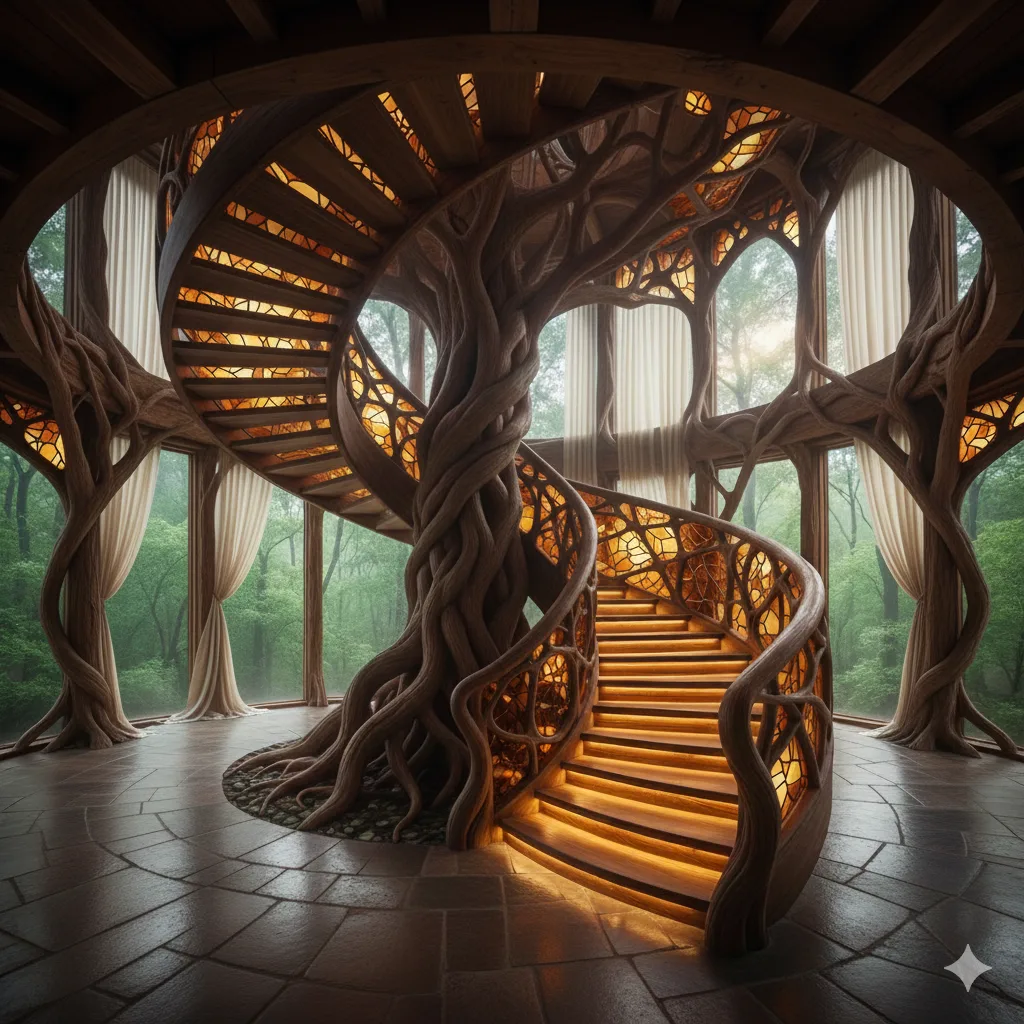
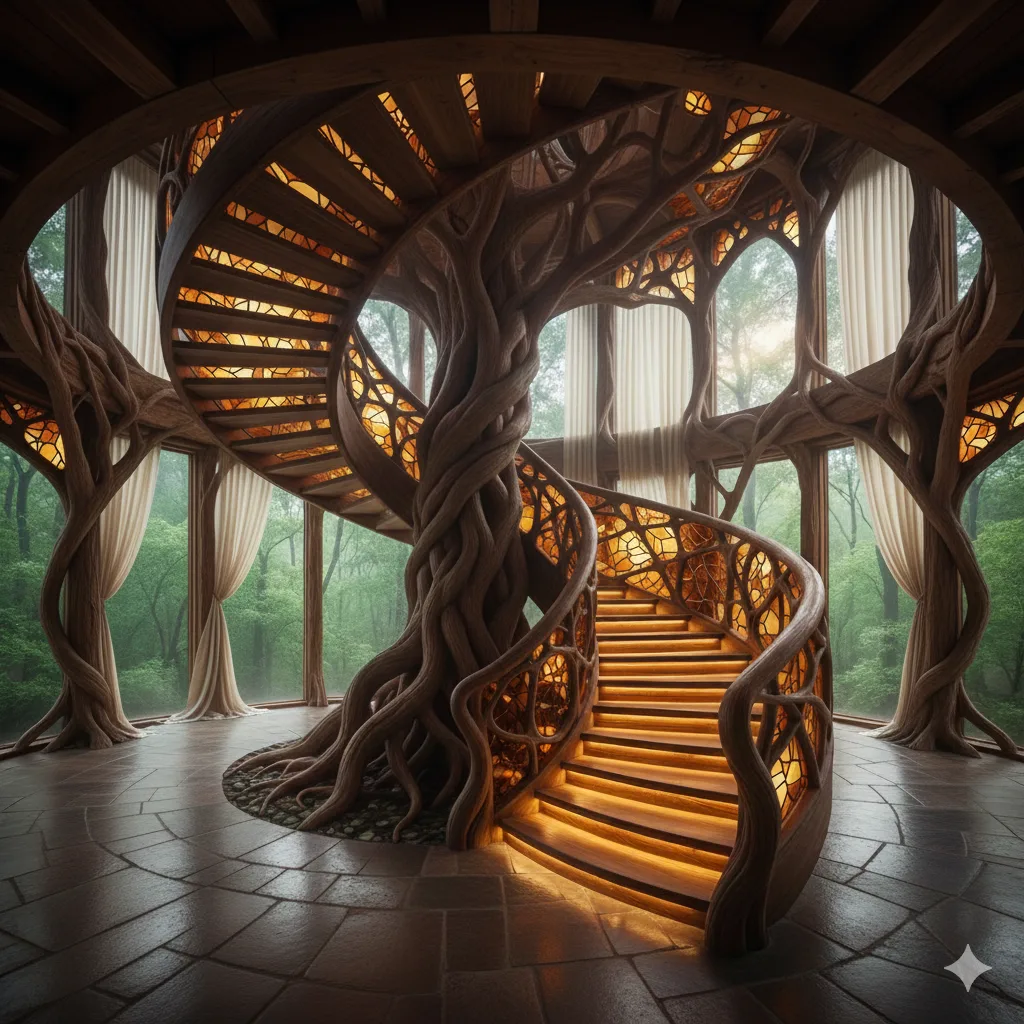
Stained glass staircases are a masterful blend of artistry and architecture, transforming functional spaces into breathtaking works of art. They serve not only as structural elements but also as focal points that bring color, light, and personality into homes and public edifices alike. Using stained glass staircases enhances aesthetic appeal and elevates the ambiance to a whole new level of sophistication. This article will guide you through the vibrant world of stained glass staircases—how to use them, what examples exist, how they compare to other design elements, and expert advice on incorporating these stunning features into your space.
Contents
- 1 The Art and Craft of Designing Stained Glass Staircases
- 2 Examples of Stunning Stained Glass Staircases Around the World
- 3 How to Use and Incorporate Stained Glass Staircases in Your Design
- 4 Stained Glass Staircases versus Other Architectural Features: A Comparative View
- 5 Conclusion
- 6 The Art and Craft of Stained Glass Staircases
- 7 Enhancing Ambiance with Stained Glass Staircases
The Art and Craft of Designing Stained Glass Staircases
Stained glass staircases are a perfect intersection of craftsmanship, design, and innovation. They transform ordinary stairways into extraordinary visual statements, leveraging the beauty of colorful glass and intricate patterns.
Before diving into specific design ideas or examples, it’s essential to understand the creative potential of stained glass staircases. They are highly customizable, allowing homeowners and designers to craft bespoke pieces that reflect personal style, historical influence, or cultural significance.
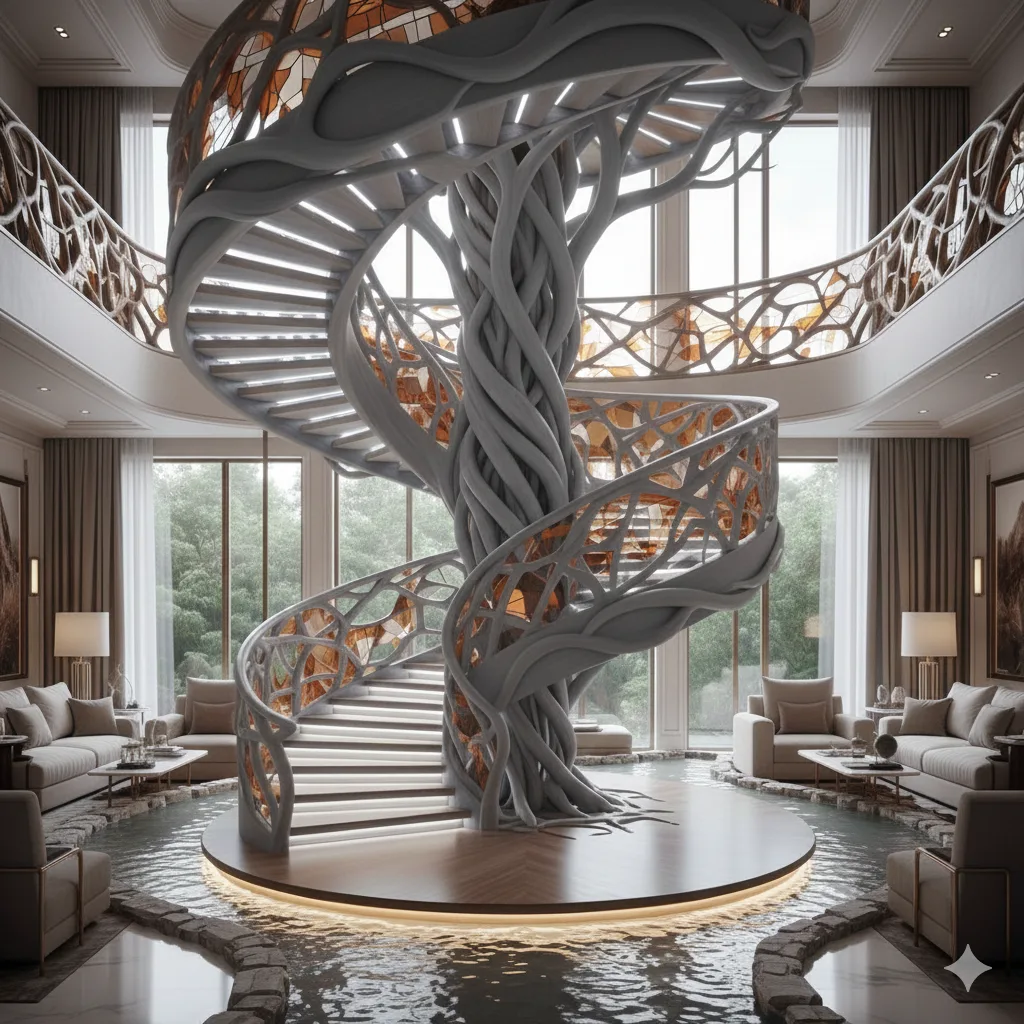
The process begins with selecting the right type of glass—whether traditional opalescent, clear textured, or modern fused glass—each offering unique visual effects. Thoughtful integration of lighting is also critical—the way light filters through stained glass can dramatically alter the atmosphere, creating stunning reflections and hues that dance across walls and floors.
Material Choices for Stained Glass Staircases
There’s a rich variety of materials available when designing stained glass staircases, each with distinct characteristics, durability, and aesthetic effects.
Traditional colored glass:
- Made from various mineral-based compositions, traditional stained glass dazzles with vibrant colors and intricate motifs.
- It’s ideal for creating detailed patterns, chiaroscuro effects, or storytelling imagery.
- Durability is a key factor—these glasses are robust but require proper framing and sealing to withstand daily use.


Fused and laminated glass:
- Modern fused glass involves layering multiple sheets with decorative elements fused at high heat, producing a rich, textured surface.
- Laminated glass combines a transparent plastic layer for added safety and UV protection—perfect for staircases exposed to sunlight.
- These options are safer and can be crafted in unique shapes and finishes, offering versatility for contemporary designs.
Textured and etched glass:
- For a more subdued or abstract effect, textured or etched glasses can add depth while diffuse light softly filters through.
- These materials work well in settings seeking a subtle interplay of light and shadow or privacy.
By understanding these options, designers can make informed choices that balance beauty, safety, and function. A stained glass staircase becomes more than just a structural component; it turns into a piece of living art.
Examples of Stunning Stained Glass Staircases Around the World
Inspiration drives innovation, and some of the most iconic stained glass staircases serve as exemplars of artistic vision combined with expert craftsmanship. Across residential, public, and religious spaces, these staircases are celebrated for their uniqueness and elegance.
Some notable examples include:
The Crystal Palace in London:
- Features stained glass incorporating natural motifs that envelope the entire staircase area.
- The lush coloration and intricate leadwork provide a fairytale-like experience, inviting visitors into a realm of fantasy and beauty.
The Musée d’Orsay in Paris:
- Famous for its majestic curving staircase illuminated by stained glass windows from the Belle Époque.
- The luminous colors cast a gentle glow over visitors, blending art and architecture seamlessly.
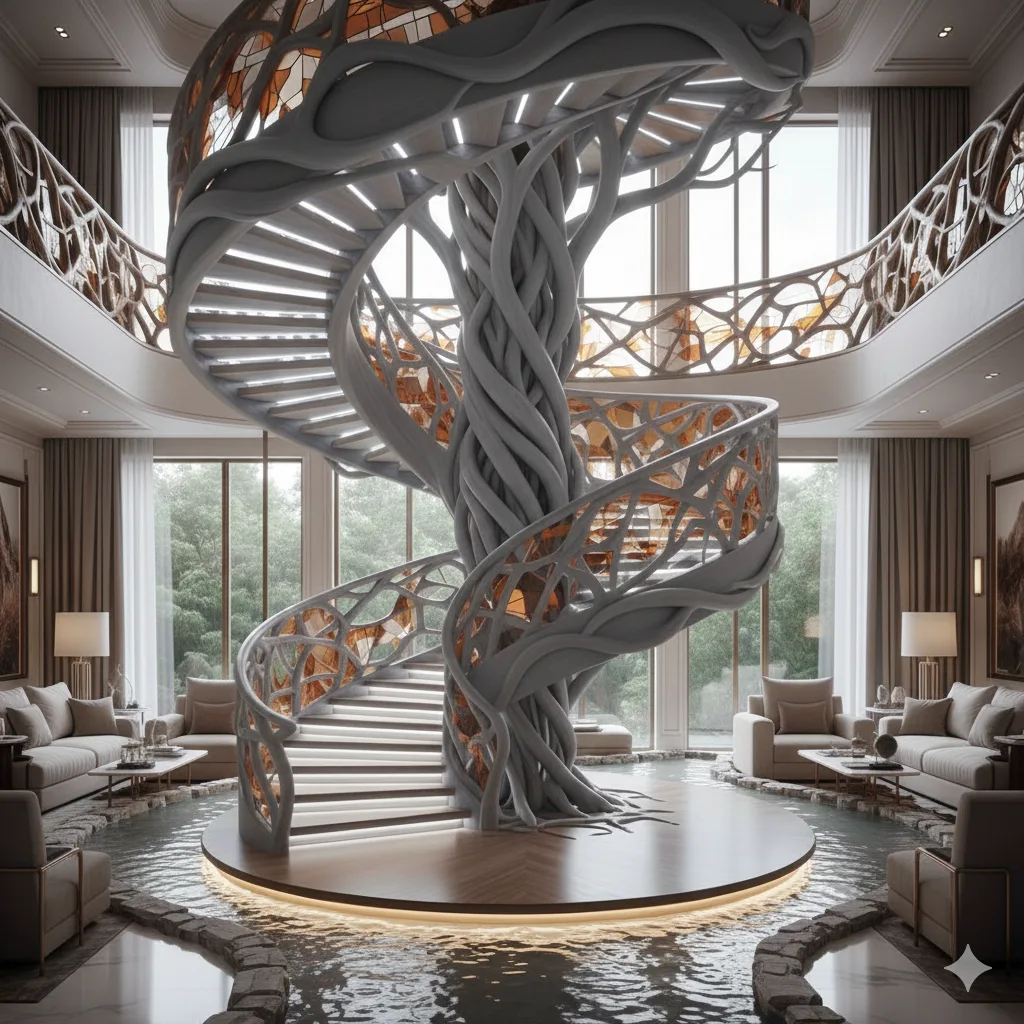
Private residences with bespoke stained glass staircases:
- Many high-end homes feature personalized stained glass balustrades and panels that narrate personal stories or historical themes.
- These designs often include family crests, floral motifs, or abstract compositions—each serving as a reflection of the homeowner’s personality.
Public art installations integrated with staircases:
- Sculptural stained glass staircases found in cultural centers and galleries transform mundane stairs into exhibits of color and form.
- These are designed not just for utility but also to elevate the cultural and artistic experience for viewers.
Each example underscores how stained glass staircases can serve as central art forms, perfectly blending function with visual impact. They set a tone of elegance and sophistication, adding value and uniqueness to any space.
How to Use and Incorporate Stained Glass Staircases in Your Design
Integrating stained glass staircases into your environment requires thoughtful planning, creative vision, and attention to detail. Proper implementation ensures safety without compromising aesthetic excellence.
Placement and orientation:
- Consider the staircase’s location—adjacent to natural light sources or central hallways to maximize visual impact.
- Position the stained glass so that it interacts beautifully with incoming light, creating shifting color effects throughout the day.
Complementary interior elements:
- Use neutral or complementary colors for walls and furnishings to allow stained glass to stand out.
- Incorporate lighting fixtures that emphasize the colors, such as spotlights or LED strips, for nighttime ambiance.
Balancing safety and design:
- Use laminated or tempered glass for durability and safety.
- Ensure that the glass panels are securely framed and installed by experienced artisans.
- Consider adding decorative metalwork or wooden accents to frame or support the stained glass, blending old-world charm with modern safety standards.
Maintenance and longevity:
- Regular cleaning with non-abrasive agents preserves the vibrancy of stained glass.
- Schedule periodic inspections to ensure the structural integrity of the installation.
Expert advice indicates that the key to successful stained glass staircase design lies in harmony—balancing vibrant colors with safe, durable construction and thoughtful placement to create an immersive visual experience that complements the overall interior aesthetic.
Stained Glass Staircases versus Other Architectural Features: A Comparative View
When debating feature focal points, stained glass staircases stand out as vibrant, personalized options. However, they’re often compared with other decorative elements like murals, sculptures, or traditional wooden balustrades.
| Feature | Visual Impact | Customizability | Safety & Durability | Cost Range |
|---|---|---|---|---|
| Stained glass staircases | High – colorful, luminous | Very high – bespoke designs | High when properly installed | $$$ – $$$$ |
| Murals & Wall Art | Moderate to high | Varies | Moderate | $$ – $$$ |
| Sculptures | High – three-dimensional form | Can be highly customized | Variable | $$$ – $$$$ |
| Wooden Balustrades | Moderate | Moderate | Very high | $$ – $$$ |
This comparison shows that stained glass staircases are uniquely suited for spaces where visual drama and personal expression are desired. While they tend to be more expensive and require maintenance, their ability to manipulate light and color makes them unparalleled in creating atmospheres of richness and depth.
Conclusion
Incorporating stained glass staircases enhances architectonic beauty by blending form, function, and artistry, transforming ordinary spaces into captivating visual narratives. With careful material selection, inspired design, and expert installation, stained glass staircases can become timeless features that reflect personal style or cultural heritage. Whether as a statement piece in a grand foyer, an artistic highlight in public spaces, or a personal sanctuary in your own home, they continue to inspire awe and admiration for their luminous charm and craftsmanship.
The Art and Craft of Stained Glass Staircases
The intricate designs of stained glass staircases embody a synthesis of artistry and functional beauty. These staircases serve not only as conduits between different levels of a structure but also as striking visual statements that invite admiration and reflection.
Historical Context of Stained Glass
Stained glass has a devotional history, traditionally associated with religious structures, particularly Gothic cathedrals. The technique emerged in Europe during the Middle Ages, where artisans crafted vibrant glass panels embellished with narratives of saints and biblical stories. This art form transitioned over centuries, evolving into secular designs for public buildings and private homes. The decline of religious architecture led to greater experimentation in stained glass, engendering an explosion of creativity that reached the residential sector.
In the modern context, stained glass staircases reflect this rich history while simultaneously pushing the boundaries of design. It combines age-old techniques with contemporary aesthetics, allowing architects and designers to apply stained glass in innovative ways. This historical foundation adds depth to the contemporary design approach, imbuing each staircase with layers of culture, craftsmanship, and artistry.
Techniques and Materials
Creating a stained glass staircase involves several steps, each demanding significant skill and attention to detail. A combination of glass types, including opaque, translucent, and textured glass, ensures diversity in color and light handling.
Artisans utilize several methods to join pieces of glass:
- Lead Came Method: This traditional technique uses strips of lead to frame each glass piece, allowing flexibility in design. It’s especially suitable for larger stained glass windows but can be employed in staircases to create intricate patterns.
- Copper Foil Method: Popularized during the Art Nouveau period, this method uses thin copper foil to bind the edges. It can create more delicate and intricate designs, allowing artists to explore intricate details that the lead came method may not facilitate.
Through these techniques, artisans are able to craft unique stained glass creations that not only serve a utilitarian purpose but also act as mesmerizing pieces of art.
Modern Applications and Innovations
The versatility of stained glass staircases has led to a renaissance in their use within modern architecture. Designers employ advanced technology to explore new forms and applications, integrating stained glass with cutting-edge materials such as acrylic or safety glass.
Architects can create entire glass enclosures, where the staircase becomes a luminous centerpiece that captures the imagination. By commissioning custom pieces, homeowners have the opportunity to express their own narratives or aesthetics through personal imagery or symbolic motifs.
Moreover, sustainability plays a crucial role in modern design considerations. Many artists now source recycled glass and eco-friendly materials without compromising on beauty or quality. This commitment to sustainability, coupled with innovative design techniques, positions stained glass staircases as a progressive option for contemporary living spaces while respecting traditional craftsmanship.
Enhancing Ambiance with Stained Glass Staircases
When a staircase serves as the central element in an indoor environment, it fundamentally alters the ambiance of the surrounding space. The interplay of light and color generated by stained glass dramatically influences perceptions and emotions within that area.
Light Interaction
Stained glass interacts uniquely with natural and artificial light, creating a dynamic environment that shifts throughout the day. In the morning, gentle hues illuminate the space, while at sunset, the colors may deepen, casting vivid shadows and highlights.
This dynamic effect creates a sense of movement within solid structures. For instance, if the staircase is positioned near a window, sunlight streaming through can create a beautiful spectacle of colors that dance across the walls and floor.
Designers must consider the staircase’s placement strategically. A well-placed staircase can enhance the user’s experience significantly, wrapping spaces in a warm glow that remains enchanting.
Emotional and Psychological Impact
Art has the power to evoke emotions, and stained glass staircases, with their radiant colors, can enhance the feelings of warmth and invitingness in a home or building. Color psychology plays a pivotal role; for example, blue shades evoke tranquility and serenity, whereas warm reds and oranges instill energy and vibrance.
The aesthetic enjoyment derived from these staircases does not just end at visual appreciation. They act as conversation starters, drawing people to admire the craftsmanship and beauty. As such, they can foster connections within homes and public spaces, harmonizing the human experience with the structure itself.
Practical Considerations and Challenges
While the benefits of stained glass staircases are abundant, practical considerations cannot be overlooked. Installation involves adherence to safety codes, particularly concerning the staircase’s structural integrity and the type of glass used.
It is crucial to involve expert artisans who can ensure that installations meet not only artistic visions but also safety standards. Homeowners must also factor in maintenance plans; stained glass, although durable, requires regular cleaning and inspections to maintain its brilliance over time.
The combination of beauty and practical implementation underscores the unique appeal of stained glass staircases. They reflect a commitment to artistry while inviting occupants to revel in their surroundings, thus merging function and art seamlessly.
Stained glass staircases embody an exquisite blend of craftsmanship and artistry, shaping the experience of movement and light in any space. Their historical roots provide depth to modern innovations, allowing for a unique expression of style and culture. By thoughtfully considering placement, design, and execution, homeowners can create stunning visuals that enrich both residential and public experiences, transforming ordinary functionality into extraordinary forms of artistic expression. As a commentary on personal style or a narrative of artistic heritage, stained glass staircases remain a timeless choice for those seeking to elevate their surroundings.